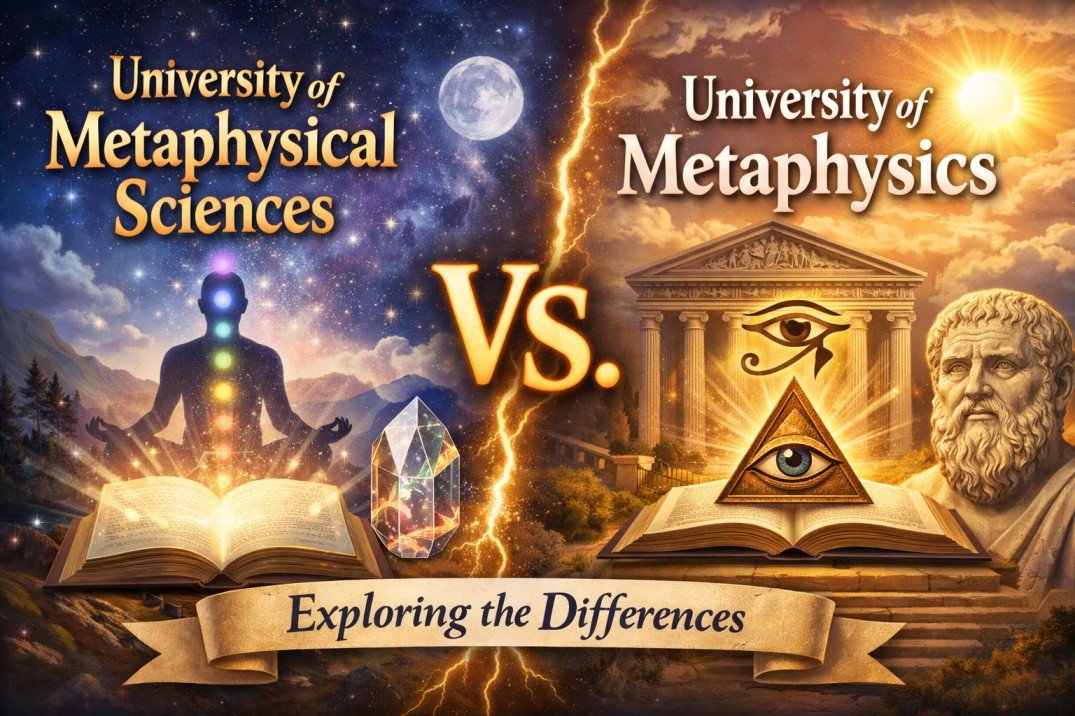
In the growing field of metaphysical studies, prospective students often come across institutions such as the University of Metaphysical Sciences and the University of Metaphysics. While both universities focus on spiritual, metaphysical, and holistic studies, they differ significantly in terms of programs, accreditation, course offerings, and institutional philosophy. Understanding these differences is key for students aiming to pursue a career or personal development in the metaphysical field.
Overview of the Universities
University of Metaphysical Sciences
The University of Metaphysical Sciences focuses on online education in holistic, spiritual, and metaphysical disciplines. Its programs are designed to provide students with knowledge of consciousness studies, healing modalities, spiritual counseling, and self-development practices. The university emphasizes flexible online learning to accommodate students worldwide.
Key Features:
-
Primarily online programs
-
Certificates, diplomas, and degree programs in metaphysical and spiritual studies
-
Focus on personal transformation and practical metaphysical applications
-
Worldwide accessibility for distance learners
University of Metaphysics
The University of Metaphysics, on the other hand, is more established with a long history of providing metaphysical education. It offers structured degree programs including bachelor’s, master’s, and doctorate levels in metaphysical sciences, holistic healing, and spiritual development. The curriculum blends theoretical study with practical applications such as energy work, meditation, and holistic counseling.
Key Features:
-
Offers both online and on-campus programs
-
Structured degree paths from undergraduate to doctoral studies
-
Emphasis on professional development in metaphysical careers
-
Long-standing institution with international recognition among holistic communities
Accreditation and Recognition
Accreditation is an essential factor for students considering enrollment in metaphysical studies.
-
University of Metaphysical Sciences: The institution is primarily recognized within spiritual and metaphysical communities but may not be regionally accredited in conventional academic systems. Its credentials are often aimed at personal enrichment and professional practice in holistic industries.
-
University of Metaphysics: While not a traditional regional-accredited university, it is often recognized in international metaphysical and holistic education circles. Its programs carry credibility among spiritual counselors, energy healers, and metaphysical practitioners globally.
Students seeking career recognition in alternative healing or spiritual counseling may benefit from understanding the relative acceptance of each institution’s credentials.
Course Offerings and Curriculum Differences
University of Metaphysical Sciences Courses
-
Metaphysical Healing
-
Spiritual Counseling and Guidance
-
Energy Medicine
-
Intuition and Consciousness Studies
-
Esoteric and Philosophical Studies
The focus is on practical applications, self-growth, and learning modalities that can be integrated into everyday life or professional practice.
University of Metaphysics Courses
-
Advanced Metaphysical Studies
-
Holistic Health and Energy Healing
-
Meditation and Mindfulness Techniques
-
Spiritual Psychology
-
Metaphysical Research and Philosophy
The curriculum often combines in-depth theoretical frameworks with practical hands-on experiences, preparing students for professional or teaching roles in metaphysical fields.
Delivery Mode and Flexibility
The delivery format plays a critical role in choosing between these universities.
-
University of Metaphysical Sciences: Entirely online, flexible schedules allow students to study at their own pace. Ideal for working professionals or international students.
-
University of Metaphysics: Offers a blend of online learning and optional on-campus workshops or retreats. Students may have structured timelines, which can help in providing more rigorous and immersive experiences.
Career Paths and Opportunities
Both universities provide avenues for professional and personal development, though with subtle differences:
-
University of Metaphysical Sciences graduates often pursue:
-
Spiritual counseling
-
Energy healing practice
-
Life coaching
-
Personal development coaching
-
-
University of Metaphysics graduates may explore:
-
Advanced metaphysical research
-
Holistic therapy centers
-
Teaching and training in spiritual institutions
-
Authors, workshop facilitators, and community leaders in metaphysics
-
Understanding your career objectives can help in selecting the institution that aligns with your professional goals.
Tuition and Cost Comparison
Tuition varies depending on the program level and delivery mode:
-
University of Metaphysical Sciences: Typically more affordable due to online format and shorter program durations. Payment plans or modular courses may be available.
-
University of Metaphysics: May have higher tuition fees for structured degree programs and optional on-campus workshops but offers more formal degree pathways.
Prospective students should consider their budget, preferred mode of learning, and long-term goals when making a decision.
Choosing Between the Two Universities
When deciding between the University of Metaphysical Sciences and the University of Metaphysics, consider the following factors:
-
Learning Format: Online-only flexibility vs. blended online and on-campus learning.
-
Program Depth: Short-term certificates vs. full degree programs.
-
Accreditation and Recognition: Importance of institutional recognition within professional metaphysical communities.
-
Career Goals: Personal enrichment and coaching vs. professional practice and teaching roles.
-
Budget and Duration: Cost-effectiveness vs. long-term structured learning.
Conclusion
Both the University of Metaphysical Sciences and the University of Metaphysics offer valuable education for students interested in metaphysical studies. Choosing the right institution depends on your goals, preferred learning style, and desired professional path.
The University of Metaphysical Sciences is ideal for flexible online learning focused on practical spiritual and metaphysical applications. The University of Metaphysics offers more formalized degree programs with professional and teaching opportunities in the holistic and spiritual community.
Frequently Asked Questions (FAQs)
Are these universities accredited?
Both are recognized within metaphysical and holistic education communities, but they are not regionally accredited by conventional academic systems.
Can I study online at both universities?
Yes, both offer online courses, though University of Metaphysics may also provide optional on-campus workshops.
What careers can I pursue after graduation?
Graduates can become spiritual counselors, energy healers, holistic practitioners, teachers, or authors in metaphysical fields.
Which university is better for flexible learning?
The University of Metaphysical Sciences is fully online and offers more flexible self-paced learning options.
Do I need prior metaphysical knowledge to enroll?
No, both universities accept beginners as well as those with prior experience in metaphysical studies.
Disclaimer
This article is for informational purposes only. Course offerings, tuition fees, accreditation, and program details may change over time. Prospective students are advised to visit the official university websites and consult academic advisors before enrolling.